
Database of the best implemented projects in EU municipalities

The portal of the Interreg Europe programme, co-funded by the European Union, offers a useful resource - a database of implemented projects by European cities in 6 different sectors:
Smart (digitalisation in municipalities)
Green (climate change, renewable energy, energy efficiency)
Connected (about sustainable mobility)
Social (about healthcare, medicine)
Citizens (about integrated urban development)
Governance (about political governance)
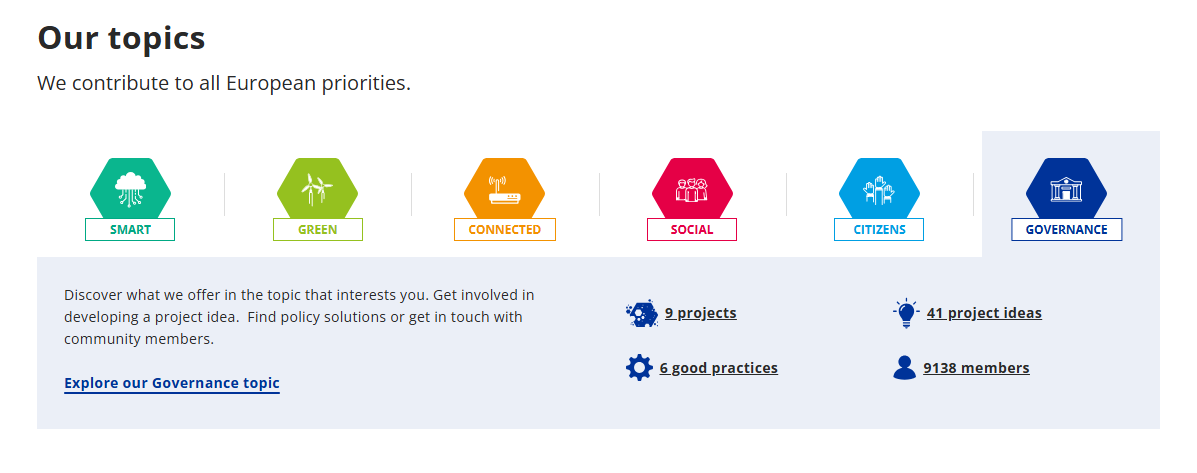
photo: 6 project areas
The portal currently has 3499 examples from municipalities in all 27 EU countries. Projects of different levels of implementation: from national to regional and local.
We believe that one day Ukrainian cities will appear on the map of useful examples, but for now, we can get ideas from the European resource.
An example of each project consists of the following elements:
- About the project (brief input information about the implemented project)
- What resources were needed for implementation (funding, team composition)
- evidence of success (measurable success indicators)
- potential for learning or transfer of experience (how the project can be useful for other municipalities)
- Additional information (images, videos, website)
Example of Spain. Energy offices project in Valencia
Link to the project https://www.interregeurope.eu/good-practices/valencia-energy-office
Five years ago, the Municipal Energy Office was opened in Valencia, based on the Valencia Climate and Energy Foundation, with the aim of moving from theory to practice in addressing climate issues and implementing energy policies in each district.
The Energy Office is a free public service that offers individual consultations and activities on energy issues. The office works in five main areas: explaining energy bills, guaranteeing the right to energy, promoting energy saving, stimulating the use of renewable energy sources and creating a culture of energy transition.
The Energy Office has consulted more than 44,000 people and held more than 500 seminars.
An example from Poland. Project for the construction of an energy-efficient kindergarten in the village of Michalowice - Regula
Link to the project https://www.interregeurope.eu/good-practices/construction-of-energy-efficient-kindergarten-in-michalowice-reguly
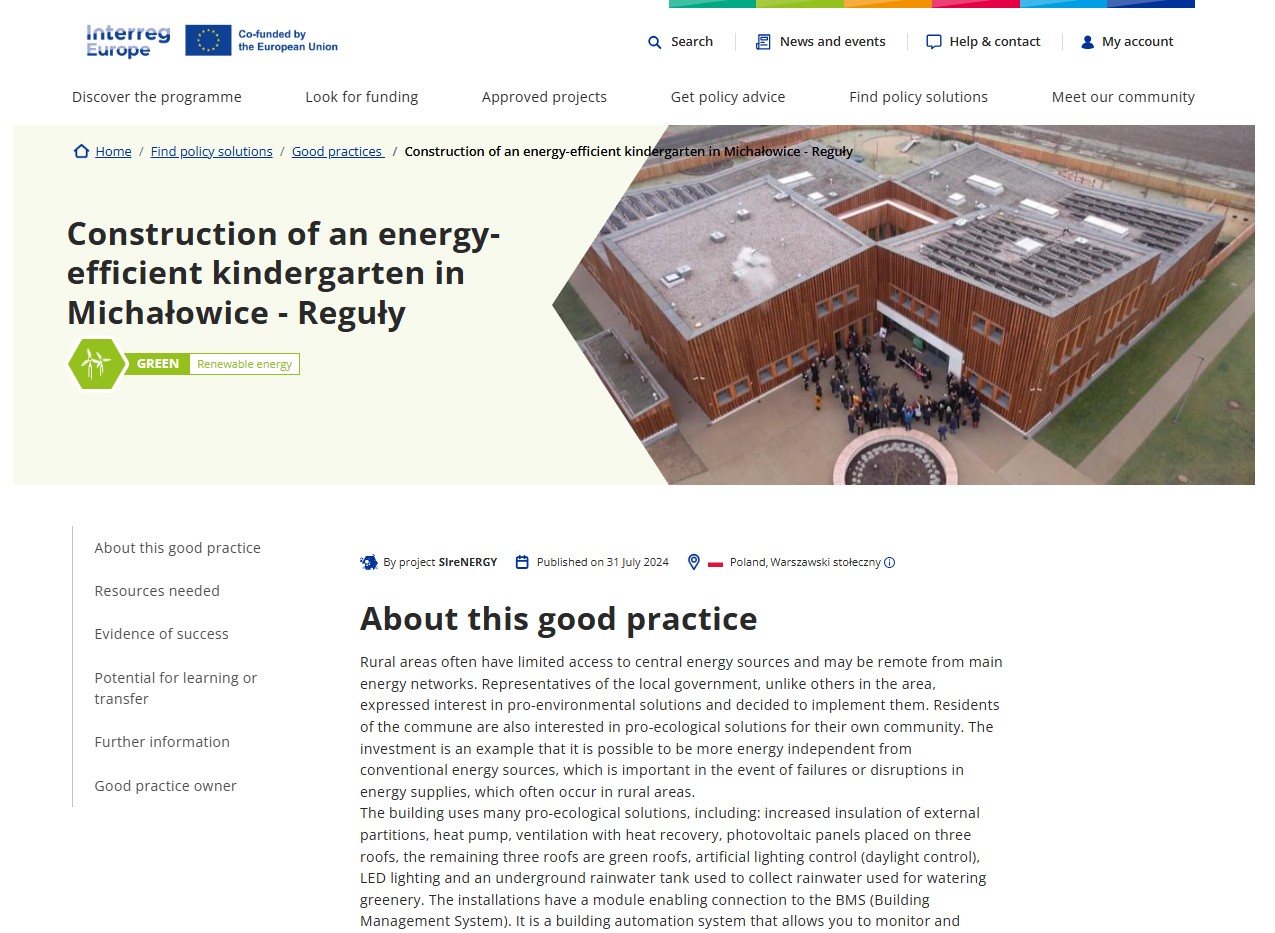
photo: example of a completed project in Poland
Rural areas often have limited access to central energy sources and can be remote from major energy networks. Local authorities, unlike others in the region, have shown interest in pro-environmental solutions and decided to implement them.
The investment in the construction of an energy-efficient kindergarten is an example of how it is possible to be more energy independent from traditional energy sources, which is important in the event of power outages, which often occur in rural areas.
Reduced energy consumption (by 117,699 GJ/year) and increased production of electricity and heat from renewable sources allows for a reduction in the use of traditional energy sources and CO2 emissions by 7.64 tonnes/year.